
Technical concept of bi0space
TECHNICAL CONCEPT
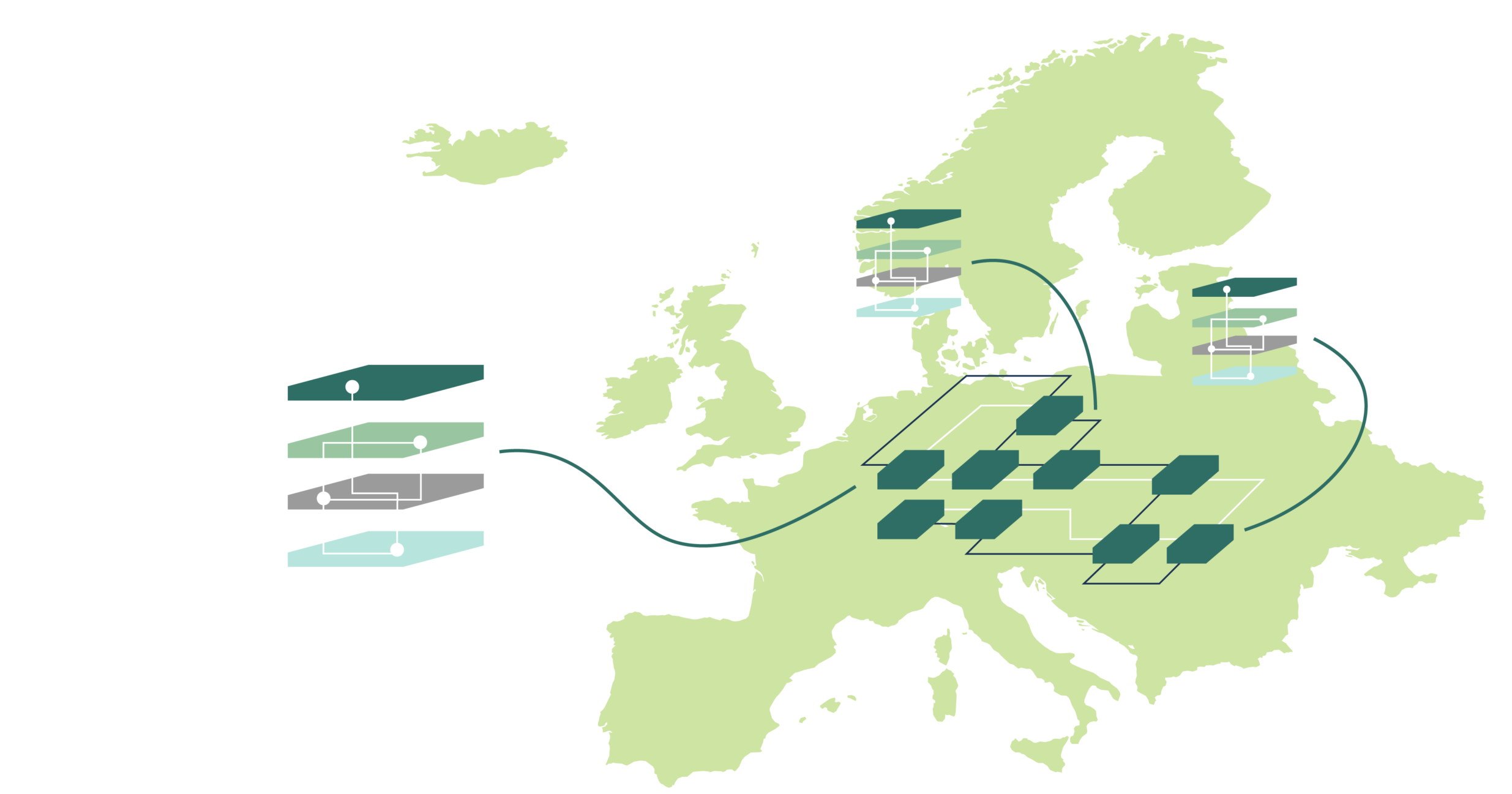
The bi0SpaCE project ecosystem will adopt the DPP4.0 initiative, enabling the creation of dynamic and decentralised DPPs enabling secure and trustworthy sharing of CE and sustainability performance data of bio-based products across the value chain, as well as providing transparency of green and CE claims to consumers. Key to this objective is the mobilization of state-of-the-art I4.0 technologies for realizing circular bio-based industries.
The deployment of the above technologies is envisioned in four layers: the physical (hardware) layer, DT layer, DPP layer, and IDS-dataspace layer. The interoperability between these layers will be ensured by using the standards (e.g. AAS) and through a semantic IMF. The adoption of the DPP4.0 framework will align bio-based industries with the benefits envisioned from the emerging European data economy, aligning with the forthcoming DPP marketplace requirements and the common European data spaces framework. Additionally, bi0SpaCE project, through the bi0SpaCE software framework, will co-define business and social frameworks, operational processes, including data governance frameworks, data quality assurance, standards creation, and onboarding processes to ensure uptake and scaling of project results across industries.
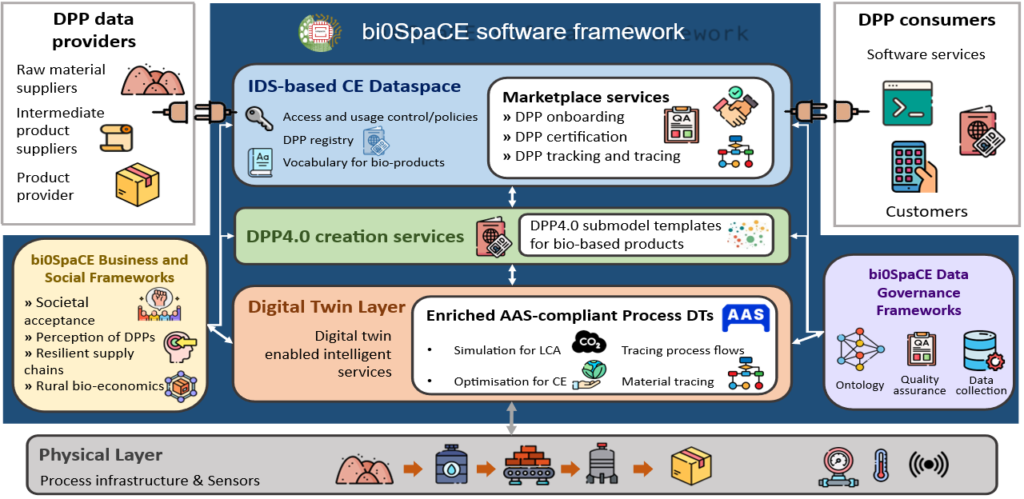
The conceptual architecture follows the layer-based approach. The physical layer is responsible for the process infrastructure and sensors while the DT layer provides Asset Administration Shell (AAS)-based DTs for processes enriched with intelligent services for different purposes, e.g., simulation for LCA or optimization for CE. The DPP layer uses AAS-compliant DPP4.0 submodel templates for bio-based products while the dataspace layer creates an IDS-based dataspace with access and usage control policies and an ontology-based vocabulary for bio-products.
Besides these four layers, the conceptual architecture also depicts the connection along the value chain by having external entities that provide DPP-related data such as raw material suppliers on the one hand, and on the other hand having DPP consumers such as customers or software services.